Introduction
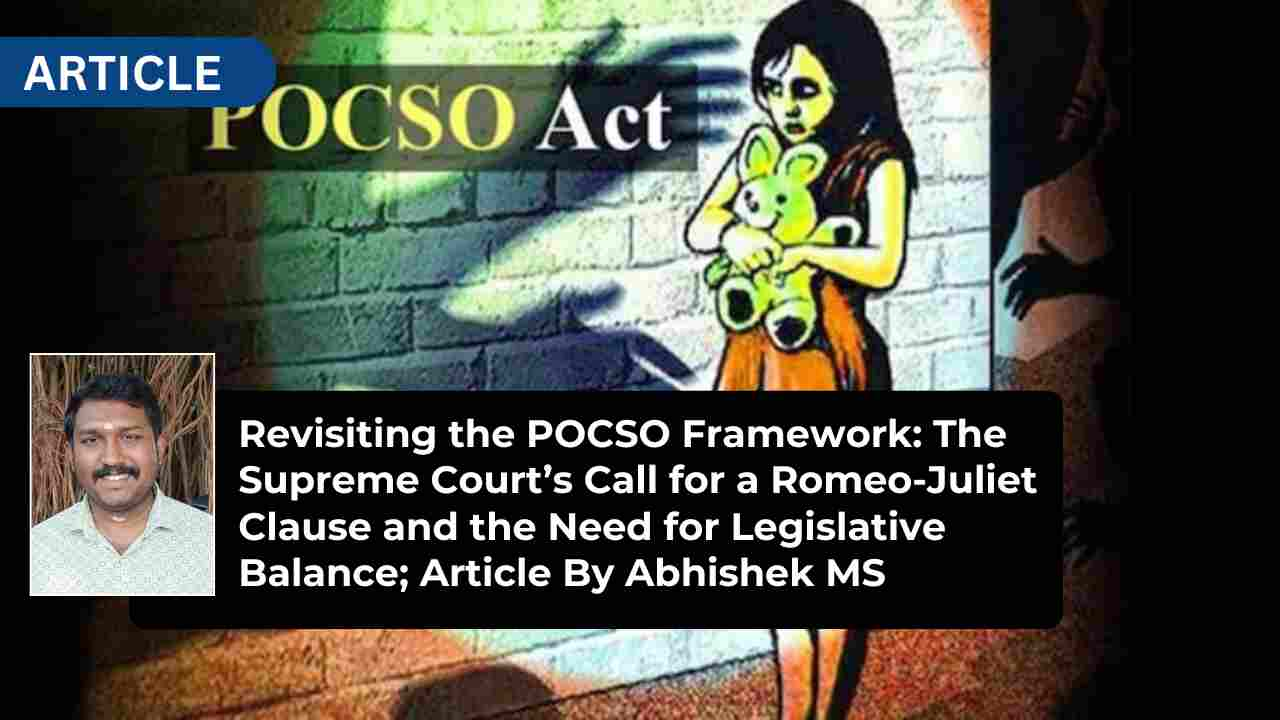
Child protection laws play a delicate role in criminallaw,wheretheStateaimstoprotectminors from harm. The POCSO Act demonstrates India’s commitment to fighting child sexual abuse through a strict framework focused on victims. However, the firm legal assumption that minors cannot consent has created complicated legal and social issues, especially in cases involving consensual relationships between teenagers.Recognizing thisissue,theSupremeCourtrecentlyurgedthelegislaturetothinkaboutaddinga Romeo-Juliet clause to the POCSO Act. This judicial action marks animportantchangetoward understanding developmental realities while maintaining the protective purpose of the Act.
Objectives and Scope of the POCSO Act
The POCSO Act makes all sexual activities involving people under eighteen illegal, regardless of consent. The law is based on the idea that minors cannot give informed consent; therefore, any sexual interaction with them is considered an offense.While this method is appropriate in instances of exploitation, abuse, and coercion, its strict application has led to:ProsecutionofteenagersinconsensualrelationshipsUseofcriminallawforparentalorsocietalcontrolSerious consequences for young accused individuals, including imprisonment and lasting stigma.
Judicial Recognition of Misuse
While handling a POCSO-related case, the Supreme Court recognized themisuseoftheActin consensual adolescent relationships. The Court noted that POCSO complaints are often filed after parental disapproval of romantic relationships, particularly when issues of caste, class, or societal norms are involved.The Court warned that the automatic application of POCSO provisions in such cases underminesthelaw’sintentanddistractsfromgenuineinstancesofsexualabuse.Italsoargued that putting adolescents through harsh criminal proceedings during such a pivotal time in their lives could cause lasting damage.
The Concept of a Romeo-Juliet Clause
A Romeo-Juliet clause is a legal exception that decriminalizes consensual sexual activity between individuals who are close in age. Such clausesexistinvariousjurisdictionsandaimto differentiate consensual peer relationships from exploitative actions.Generally,these provisions:Apply only when both individuals are minors or nearinage Set a maximum allow a bleagegap Exclude cases involving coercion,grooming,or a buse of power.The Supreme Court clarified that this clause would not weaken the POCSO Act.Instead,it would ensure the law continues to focus on exploitative behavior.
Constitutional and Jurisprudential Considerations
The Court’s recommendation stems from important constitutional principles:
Article14–Equality Before Law Treating consensual teenagers thesameasadultsexualoffendersraisesconcernsaboutunfair classification and excessive punishment.
Article21–Right to Life and Personal Liberty Criminal prosecution for consensual relationships violates dignity,privacy,andpersonal freedom, especially when it leads to imprisonment and social exclusion.Child-Centric Justice Alawmeant for child welfare should not operate in ways that harmthe child morethan the alleged offense itself.
Impacton the Criminal Justice System
The lack of a close-in-age exemption has resulted in:Overburdening of Special POCSO Courts Forced testimony against consensual partners Erosion of public trust in childprotection laws Disproportion at epunishmentun related to culpability.By suggesting legislative reform, the Supreme Court aims to improve enforcement and restore the law’s credibility.
Safeguard sand Legislative Caution
The Court stress edthatany Romeo-Juliet clause must be:Narrowly defined Clearly outlined Excluded from cases involving power imbalance sormanipulation Designed to prevent misuse by adult offenders.This approach ensures that child protection remains the top priority while treating consensualadolescent behavior sensitively.
Conclusion
The Supreme Court’scallforaRomeo-JulietclauseshowsapositiveshiftinIndiancriminallaw. It recognizes that justice must be contextual, proportionate, and compassionate, especially for teenagers. Adding such a clause would not weaken the POCSO Act; instead, it wouldimproveit, aligning legal intent with social realities and constitutional values.Taking legislative action in this direction would represent a significant move toward a balanced child protection system, one that protects without unjustly punishing and penalizes without bias.